Seven Goddesses the World Forgot: The Divine Feminine Waiting for Its Epic
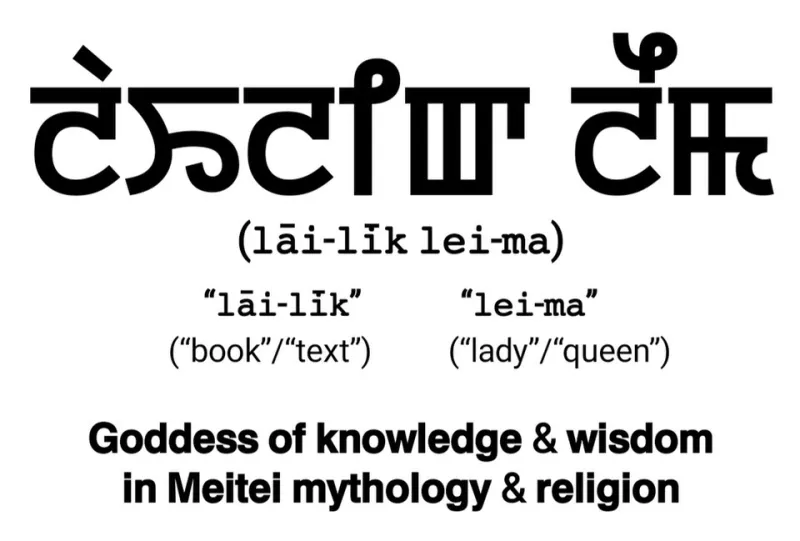
Photo: Haoreima, Public domain, via Wikimedia Commons
The hunger for mythologically grounded storytelling has never been more evident in American entertainment. From streaming series that reimagine Greek heroes to blockbuster films that resurrect ancient pantheons, audiences have demonstrated a consistent appetite for narratives drawn from the world's sacred traditions. Yet a striking pattern persists: the goddesses who once anchored those traditions—who governed the underworld, wove the fabric of the cosmos, and embodied forces that entire civilizations organized their lives around—remain largely absent from the screen.
This is not a minor oversight. These are figures of extraordinary narrative complexity, whose stories explore themes of sovereignty, transformation, grief, and cosmic power with a depth that few modern fantasy constructions can match. What follows is a survey of seven such figures, drawn from cultures across the globe, each of whom represents not only a fascinating mythological subject but a genuinely compelling protagonist waiting to be discovered.
1. Ereshkigal — Mesopotamian Queen of the Great Below
Long before Persephone descended into the Greek underworld, the Sumerians had already imagined a queen who ruled that realm with absolute authority. Ereshkigal, whose name translates roughly as "Great Lady of the Great Earth," presided over the land of the dead in Mesopotamian tradition. She is not a captive of her domain. She chose it—or was assigned to it at the dawn of creation—and she governs it with fierce, uncompromising sovereignty.
The myth of Inanna's descent into the underworld, one of the oldest written narratives in human history, positions Ereshkigal as the formidable force her sister must face. But the more one examines the text, the more Ereshkigal emerges as a figure of genuine pathos: isolated, powerful, and consumed by a grief so vast it governs an entire realm. Her story is, at its heart, one of power acquired through abandonment—and the complicated relationship between authority and loneliness. For a prestige fantasy series, her narrative architecture is essentially pre-built.
2. Amaterasu — Japanese Goddess of the Sun and Cosmic Order
In the Shinto tradition, the sun is not governed by a male deity. It is Amaterasu Ōmikami, the Great Divinity Illuminating Heaven, who holds the solar domain—and with it, the order of the entire cosmos. Her mythology includes one of antiquity's most resonant withdrawal narratives: after a conflict with her brother Susanoo, Amaterasu retreats into a cave, plunging the world into darkness and crisis. The other gods must devise an elaborate performance of joy and laughter to coax her back into the light.
This story operates on multiple levels simultaneously. It is a cosmological explanation for eclipses. It is a psychological portrait of divine grief and the world's dependence on a single figure's willingness to participate in it. It is also, remarkably, a story about the power of community and creativity to restore what isolation has taken. An adaptation centered on Amaterasu would offer American audiences something genuinely unfamiliar: a sun deity whose mythology is defined not by conquest but by withdrawal, return, and the fragile negotiation between a divine figure and the world that needs her.
3. Oya — Yoruba Goddess of Storms, Change, and the Threshold of Death
Within the Yoruba religious tradition, which has profoundly shaped spiritual practice across West Africa and the African diaspora—including significant communities throughout the United States—Oya stands as one of the most dynamic and philosophically rich figures in the entire pantheon. She is the orisha of storms, winds, transformation, and the boundary between the living and the dead. She does not merely represent change; she is change, in its most elemental and sometimes terrifying form.
Oya is a warrior and a mother, a force of destruction that clears space for new growth. Her stories grapple with the necessity of loss, the courage required to transform, and the sacred role of those who stand at thresholds. In a cultural moment when transformation narratives resonate deeply across American audiences, Oya's mythology offers a framework that is both ancient and urgently contemporary.
4. Sekhmet — Egyptian Goddess of War, Healing, and Contained Catastrophe
Sekhmet occupies a position in the Egyptian pantheon that defies easy categorization. She is simultaneously a goddess of war and a goddess of medicine—a pairing that, far from being contradictory, reflects a sophisticated understanding that the forces capable of destruction are often the same ones capable of healing. Her mythology includes a narrative in which she is sent by Ra to punish humanity for its transgressions and nearly annihilates the human race before being stopped through an elaborate divine intervention involving red-dyed beer.
This story is not simply cautionary. It is a meditation on the nature of righteous fury and the question of who gets to decide when justice has gone far enough. Sekhmet's dual nature—destroyer and healer, instrument of divine will and autonomous force—makes her one of mythology's most genuinely complex female figures. She has appeared briefly in various fantasy contexts, but never with the depth her mythology demands.
5. Ix Chel — Maya Goddess of the Moon, Medicine, and Weaving
The Maya civilization produced one of the ancient world's most sophisticated astronomical traditions, and at the center of its lunar mythology stood Ix Chel, the goddess of the moon, medicine, weaving, and childbirth. She is associated with both the creative and destructive aspects of water—the rains that nourish crops and the floods that destroy them. In some traditions, she is depicted as an old woman with a serpent headdress and a skirt of crossed bones, pouring water from an inverted vessel.
Ix Chel's mythology connects the cycles of the moon to the cycles of the human body, to the patterns woven into cloth, and to the transmission of knowledge across generations. Her story is one of the most genuinely cosmic available to any storyteller—a figure who embodies the understanding that creation and dissolution are not opposites but partners in an endless cycle.
6. Morrigan — Celtic Goddess of Fate, Battle, and Sovereignty
The Morrigan of Irish mythology is among the most misrepresented figures in popular fantasy. Frequently reduced to a villain or a temptress, she is in the original texts a goddess of sovereignty—her favor or disfavor determining the fate of kingdoms and warriors. She appears to heroes before battle not to seduce them but to test their worthiness, and her prophetic vision encompasses the full scope of a conflict's consequences.
Her triple nature—often expressed through the figures of Badb, Macha, and Nemain—represents the multifaceted character of war: its chaos, its territorial claims, and its psychological devastation. A faithful adaptation of the Morrigan would require a storyteller willing to resist the impulse to simplify her into a recognizable archetype. The reward for that resistance would be a character of extraordinary dramatic power.
7. Coatlicue — Aztec Earth Mother and Embodiment of Cosmic Duality
Coatlicue may be the most visually striking deity in this survey. Her iconography—a skirt of writhing serpents, a necklace of human hearts and hands, a face formed by two facing serpent heads—is deliberately overwhelming. She is the Aztec earth mother, the goddess who both generates life and receives the dead back into herself. She is not a benevolent maternal figure in any conventional sense. She is the totality of existence: generative, consuming, and indifferent to human preference.
Her mythology includes the miraculous conception of Huitzilopochtli, the sun god, from a ball of feathers that fell upon her while she was sweeping. The story that follows—involving her outraged children, a cosmic battle, and the birth of the sun itself—is among the most dramatically rich origin narratives in any mythological tradition. Coatlicue does not need to be softened to be compelling. Her power lies precisely in her refusal to be reduced.
The Archive Awaits
The mythological traditions of the world constitute an archive of extraordinary imaginative depth, and the female figures within that archive have been waiting with remarkable patience for their narratives to be told with the seriousness they deserve. The growing demand for diverse mythological representation in American entertainment is not merely a matter of cultural politics. It is a recognition that the stories audiences have been given represent only a fraction of what is available.
Ereshkigal and Amaterasu, Oya and Sekhmet, Ix Chel and the Morrigan and Coatlicue—these are not obscure footnotes. They are central figures in traditions that shaped civilizations. Their stories are ready. The only question is whether storytellers are willing to meet them where they live: in the full, uncompromised complexity of the myths that made them.