When Asgard Became a Franchise: The Mythology Marvel Left Behind
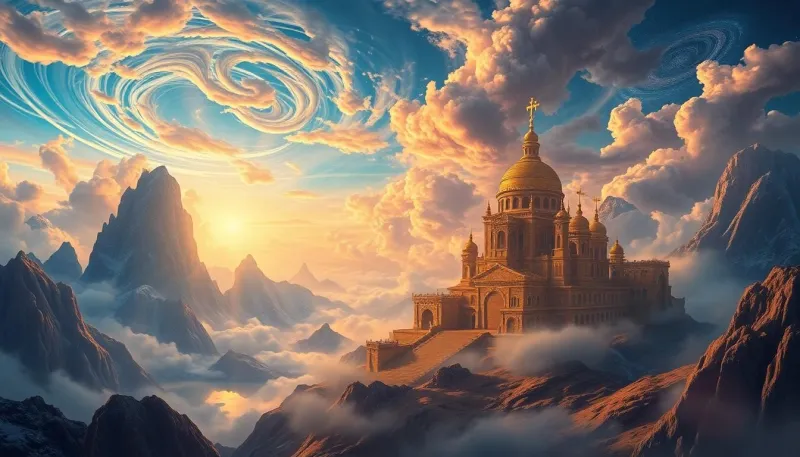
Photo: ancient Norse Viking mythology Odin Asgard dramatic landscape dramatic sky, via app.cuppa.ai
For a significant portion of the American public, the word Asgard conjures a gleaming citadel suspended above alien clouds, populated by chiseled warriors in color-coded armor. That image belongs entirely to Marvel Studios. The Asgard that existed for centuries before any comic book was inked—the one preserved in the Prose Edda and the Poetic Edda, transcribed by Icelandic scholar Snorri Sturluson in the thirteenth century—is a far stranger, more melancholy, and ultimately more human place. As a new wave of Norse-themed Marvel productions continues to roll through Hollywood, it is worth pausing to ask what has been surrendered in the translation from sacred narrative to cinematic franchise.
The Eddas vs. the Multiplex
The Norse mythological tradition is not a simple heroic epic. It is, at its philosophical core, a meditation on inevitability. The gods of the Norse pantheon are not omnipotent beings who will ultimately triumph over chaos. They are mortal in the deepest sense: they age, they err, they grieve, and they will die. Ragnarök—the twilight of the gods—is not a villain's scheme to be thwarted by a team of superheroes. It is a cosmological certainty that Odin himself cannot prevent, despite spending centuries gathering knowledge and sacrificing personal comfort in the attempt.
This is the detail that Hollywood consistently discards. In the MCU, Ragnarök becomes a third-act set piece, reframed as a liberation narrative complete with arena combat and a rock anthem. The theological weight of the original concept—that even gods must face annihilation, and that wisdom lies in living honorably within that truth—is replaced with the more commercially palatable message that cleverness and teamwork can solve any problem. The apocalypse becomes a plot device rather than a worldview.
Odin: The Wanderer Reduced to a Supporting Role
Perhaps no figure suffers more dramatically from Marvel's interpretive choices than Odin Allfather. In the original mythological texts, Odin is a deeply ambiguous figure. He is a wanderer who walks among humans in disguise, a seeker of wisdom who sacrificed one eye at Mímir's well and hung himself from Yggdrasil—the world tree—for nine days to earn the knowledge of runes. He is a deity of war, poetry, death, and prophecy simultaneously. He cultivates the warriors of Valhalla not out of generosity but because he will need them when Ragnarök arrives. He is calculating, grief-stricken, and at times morally compromised.
The MCU's Odin, by contrast, functions primarily as a narrative device—a source of exposition and paternal conflict for Thor and Loki. His complexity is acknowledged but never truly explored. The rich tradition of Odin as a cosmic wanderer who moves through the nine realms gathering intelligence, testing mortals, and making uncomfortable alliances is almost entirely absent. What remains is a wise king who occasionally dispenses wisdom from a throne.
Loki and the Problem of Villainy
Loki's treatment in popular media deserves particular attention. In the original myths, Loki occupies a role that has no clean modern equivalent. He is neither purely villainous nor reliably heroic. He is a shape-shifter in the most literal sense—he changes sex, species, and allegiance with equal ease. He assists the gods in moments of genuine crisis and engineers disasters that lead to the deaths of beloved figures, most notably the radiant Baldr. His motivations are rarely transparent, and the myths do not ask readers to resolve the contradiction. Loki simply is what he is: a force of creative disruption that the ordered cosmos both requires and cannot ultimately contain.
Marvel's Loki has been softened into a tragic antihero whose villainy is consistently explained through abandonment trauma and sibling rivalry. This is not without narrative merit—the MCU's Loki has resonated deeply with audiences precisely because he is emotionally legible. But the mythological Loki's unsettling quality, his refusal to be categorized, is the very thing that made him theologically significant. He represented the unpredictability embedded in existence itself. Rendering him sympathetic and ultimately redeemable removes that discomfort entirely.
What American Audiences Are Missing
The Norse myths carry themes that are remarkably relevant to contemporary American life: the tension between fate and agency, the relationship between sacrifice and knowledge, the question of how one lives meaningfully when all outcomes are uncertain. These are not archaic concerns. They are the concerns of any thoughtful person navigating a world that does not offer guarantees.
The myth of Odin at Mímir's well, for instance, is not simply a story about a god acquiring magical powers. It is a story about the cost of wisdom—that genuine understanding of the world requires giving something irreplaceable in exchange. The myth of Thor's fishing expedition to catch the Midgard Serpent is not merely an action sequence. It is a story about the limits of even the greatest strength, and the strange dignity of confronting something that will eventually destroy you.
These narratives ask audiences to sit with discomfort rather than resolving it through heroic triumph. Hollywood, operating within a commercial framework that rewards satisfying conclusions, is structurally ill-suited to honor that request.
The Responsibility of Adaptation
None of this is to suggest that adaptation is inherently corrupt. Mythology has always been a living tradition, reshaped by each culture that inherits it. The Norse myths themselves were recorded centuries after they were first told, filtered through the perspective of a Christian scholar who was simultaneously preserving and interpreting them. Transformation is not betrayal.
The more pressing question is whether the current adaptations are engaging with the source material at all, or simply borrowing its aesthetic vocabulary—the hammers, the ravens, the runic imagery—while discarding the ideas those symbols were meant to carry. A franchise can name its city Asgard without ever genuinely reckoning with what Asgard meant to the people who imagined it.
For those who find themselves curious about the world behind the films, the Prose Edda remains accessible and genuinely absorbing. The myths breathe differently there. The gods are not larger than life so much as they are achingly, recognizably mortal—striving against a cosmos that has already written its own ending, and finding meaning in the striving regardless. That is a story worth knowing. It is, in many ways, a more powerful story than anything a franchise can afford to tell.