The Roads That Magic Travels: What Ancient Trade Networks Teach Fantasy Worldbuilders
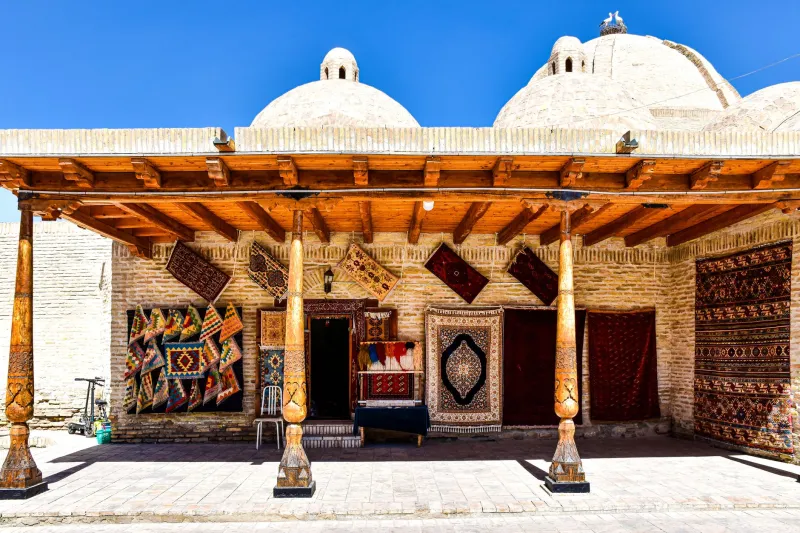
Every fantasy world eventually confronts the same foundational question: where does the magic come from, and who controls it? Most answers default to geography — the ancient ruins, the sacred mountain, the ley lines converging beneath the capital city. What almost none of them consider is the more historically grounded answer: magic, like silk, like spice, like the knowledge of how to smelt iron, travels. It accumulates at crossroads. It transforms as it moves. And the civilizations that sit astride its paths grow powerful in ways that have very little to do with being chosen.
The ancient world offers a more sophisticated model of how extraordinary resources — including knowledge systems that functioned, in practical terms, as magic — circulated across human civilization. Fantasy worldbuilding that ignores this model produces settings that feel aesthetically elaborate but structurally hollow. The Silk Road, the Mediterranean trading networks, and the indigenous exchange systems of pre-Columbian North America all operate according to principles that, applied to fictional magic systems, would generate far more coherent and surprising worlds than the genre currently produces.
What the Silk Road Actually Was
Popular imagination tends to picture the Silk Road as a single highway stretching from China to Rome along which merchants walked in caravans bearing luxury goods. The reality was considerably more complex and considerably more instructive. The Silk Road was not a road. It was a network of overlapping, competing, and complementary routes — some overland, some maritime — along which goods moved in relay, passing through multiple hands before reaching their final destinations.
More importantly, what moved along those routes was not only silk. It was ideas, technologies, diseases, religious systems, and the specific knowledge required to produce or replicate what the other end of the network possessed. Buddhism traveled the Silk Road. So did papermaking. So did the mathematical frameworks that would eventually become foundational to European scientific development. The trade in objects was inseparable from the trade in understanding.
For a fantasy worldbuilder, this suggests an immediate structural principle: magic should not simply exist in certain places. It should have arrived there, carried by specific historical vectors, and its presence should reflect the accidents and negotiations of that arrival. A city that controls a mountain pass does not merely tax the merchants who cross it — it taxes the magical knowledge those merchants carry, absorbing, adapting, and occasionally distorting what passes through its gates.
The Mediterranean Model: Synthesis as Power
The ancient Mediterranean presents a different but equally instructive model. What made cities like Alexandria and Carthage extraordinary was not that they possessed unique magical resources in a geographic sense, but that they served as synthesis points — places where Egyptian, Greek, Phoenician, and eventually Roman traditions converged and produced something that none of those traditions could have generated independently.
Alexandrian scholarship, for instance, was not simply Greek scholarship conducted in Egypt. It was a genuine hybrid, shaped by access to Egyptian astronomical records, Babylonian mathematical traditions, and the commercial necessity of communicating across linguistic and cultural boundaries. The Library of Alexandria was, in this sense, less a monument to Greek intellectual achievement than a monument to the productive consequences of sustained cross-cultural exchange.
Translated into fantasy terms, this model suggests that the most powerful magical traditions in a coherent fantasy world should emerge not from isolation but from contact. The wizard who has mastered the synthesis of three competing magical systems, each carried along different trade routes, should be more formidable than the one who has perfected a single indigenous tradition — not because synthesis is inherently superior, but because access to multiple frameworks provides resources for problem-solving that no single tradition can match.
Indigenous Exchange Systems and the Myth of Primitive Economies
One of the most underexplored resources for fantasy worldbuilding is the sophisticated exchange network that existed across pre-Columbian North America. The Mississippian culture, centered on the city of Cahokia near present-day St. Louis, maintained trade connections that stretched from the Gulf Coast to the Great Lakes and from the Atlantic seaboard to the Rocky Mountain foothills. Copper from the Great Lakes appeared in burial sites in Florida. Marine shells from the Gulf Coast appeared in ceremonial contexts in the Ohio Valley.
Critically, what moved along these networks was not merely material goods. Ceremonial knowledge, sacred objects, and the ritual specialists who understood how to use them were part of the same exchange system. Certain objects carried power only because they had traveled — their distance of origin was inseparable from their sacred significance. An object that had crossed three cultural boundaries to arrive in a given community carried the accumulated authority of all those crossings.
This principle — that distance and exchange history are themselves forms of value — is almost entirely absent from fantasy worldbuilding. In most fantasy economies, a magical artifact is powerful because of what it intrinsically is. The idea that it might be powerful because of where it has been and whose hands have touched it represents a genuinely different ontology of magical objects, one that would generate far more interesting stories about acquisition, provenance, and the ethics of possession.
The Bottleneck as World Engine
Perhaps the most practically applicable insight from historical trade network analysis is the concept of the bottleneck — the geographic or political chokepoint through which a disproportionate share of valuable exchange must pass. The Strait of Hormuz. The Bosphorus. The mountain passes of Central Asia. Whoever controls a bottleneck does not need to produce anything. They only need to tax what flows through.
In a magic system designed along these principles, the most powerful political entities in a fantasy world might not be the ones closest to magical sources, but the ones positioned between sources and destinations. A city built at the confluence of two magical traditions might derive its power entirely from its role as interpreter and intermediary — translating, adulterating, and re-exporting magical knowledge in forms that serve its own interests.
This model also generates natural sources of conflict that feel structurally grounded rather than arbitrary. Wars in such a world are not fought over who possesses magic, but over who controls the routes along which magical knowledge travels. Alliances are formed between parties who need each other's access, not merely each other's armies. Espionage becomes the dominant form of magical competition, because stealing a trade route's secrets is more efficient than destroying its infrastructure.
Building Worlds That Breathe
Fantasy worldbuilding at its best produces settings that feel as though they existed before the story began and will continue after it ends. The surest path to that effect is not more detailed maps or more elaborate pantheons. It is the construction of systems — economic, ecological, magical — that operate according to internally consistent principles derived from genuine human experience.
The ancient world's trade networks are not merely historical curiosities. They are blueprints for how extraordinary things move through human civilization, how they change in transit, and how the act of exchange transforms both parties. Fantasy worlds built on these foundations would not merely feel more believable. They would feel, in the deepest sense, inhabited — shaped by the same forces of desire, competition, and necessity that have always driven human beings to build roads across impossible distances in pursuit of what they cannot make themselves.