Gods Nobody Remembers: How Obscure Ancient Pantheons Became Fiction's Greatest Untapped Resource
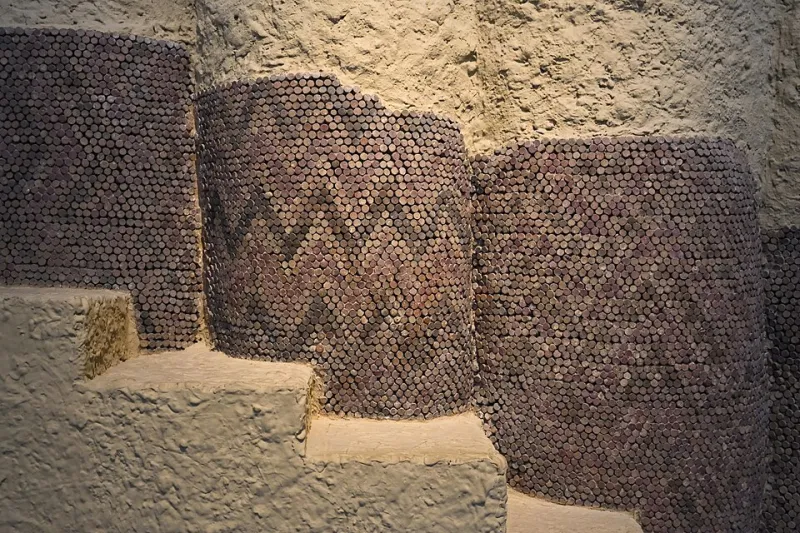
Photo: Dosseman, CC BY-SA 4.0, via Wikimedia Commons
There is a peculiar irony at the center of modern fantasy publishing. Readers who can name every member of the Olympian council, who recognize Mjolnir on a coffee mug from thirty feet away, who grew up watching Thor argue with Loki across multiplex screens—these same readers know almost nothing about Inanna, the Sumerian queen of heaven who descended into the underworld and returned transformed. They have never encountered Teshub, the Hittite storm god whose divine conflicts shaped the cosmological imagination of an entire civilization. They cannot place Quetzalcoatl within a theological framework that extends far beyond the feathered serpent iconography that occasionally appears on museum gift shop merchandise.
This gap is not a failure of curiosity. It is an opportunity—one that a growing number of authors, game designers, and storytellers are beginning to seize with remarkable results.
The Familiarity Problem with Greek and Norse Mythology
The dominance of Greek and Norse mythology in Western popular culture has produced an unexpected creative liability. Familiarity, for all its commercial appeal, tends to calcify narrative possibility. When a writer reaches for Zeus, they are not simply borrowing a character. They are inheriting decades of accumulated interpretation, Marvel adaptations, Disney treatments, and high school English class associations that arrive with the name like unwanted luggage.
The god himself becomes almost secondary to the cultural baggage surrounding him. Audiences arrive with expectations already formed, and the author must either satisfy those expectations—producing something derivative—or deliberately subvert them, which requires expending creative energy on deconstruction rather than construction.
Lesser-known pantheons carry none of this weight. When N.K. Jemisin drew from West African and Afro-Caribbean spiritual traditions in constructing the divine architecture of her Inheritance Trilogy, she was working in territory where readers had no preconceptions to satisfy or overturn. The gods she built could behave according to their own internal logic rather than conforming to audience-imposed templates. The result was a mythological framework that felt genuinely alien in the best possible sense—ancient and coherent and unlike anything readers had encountered before, precisely because they had no reference point from which to second-guess it.
Sumer and the Original Divine Drama
Sumerian mythology, emerging from the river valleys of ancient Mesopotamia roughly five thousand years ago, represents perhaps the richest underutilized narrative archive available to contemporary fiction writers. The theological system developed by the Sumerians and later adapted by the Akkadians, Babylonians, and Assyrians contains dramatic structures of extraordinary sophistication.
Consider the Descent of Inanna, one of the earliest written narratives in human history. Inanna, the most powerful goddess in the Sumerian pantheon, chooses to enter Kur—the land of the dead—for reasons that scholars still debate. At each of seven gates, she is stripped of a divine garment or ornament until she arrives before her sister Ereshkigal naked and powerless. She is killed. The world above begins to wither. Her servant negotiates her resurrection. She returns—but the price is that someone must take her place, and she chooses her husband Dumuzi, who had not mourned her absence.
This narrative contains more psychological and theological complexity than most contemporary fantasy novels manage across entire series. It addresses power, vulnerability, grief, betrayal, and the cyclical nature of existence within a compact mythological framework that has no real equivalent in the Greek or Norse canons. Yet it appears in mainstream fiction with vanishing rarity.
The Hittites and a Mythology Built for Conflict
The Hittite Empire, which dominated Anatolia during the second millennium BCE, developed a theological system that borrowed extensively from surrounding cultures while producing something distinctly its own. The Hittite divine court was a genuinely multicultural assembly—gods from Hurrian, Sumerian, and indigenous Anatolian traditions coexisted within a single mythological framework, often uneasily.
The resulting narratives are remarkable for their emphasis on divine succession and cosmic instability. In the Song of Kumarbi, the sky god Anu is overthrown by Kumarbi, who bites off and swallows Anu's genitals during their struggle, accidentally impregnating himself with several divine beings including the storm god Teshub. What follows is a generational conflict involving stone monsters, sea deities, and a tiger river that reads less like ancient theology and more like the outline for an ambitious fantasy series.
The Hittite mythological cycle is, in structural terms, almost perfectly engineered for serialized fiction. Its emphasis on dynastic conflict, inherited power, and the instability of divine order maps naturally onto the kinds of multi-generational narratives that contemporary fantasy audiences have demonstrated enormous appetite for.
Mesoamerica's Narrative Density
Mesoamerican mythological traditions—Aztec, Maya, Olmec, Zapotec—present a different kind of creative challenge and opportunity. These are not obscure traditions in the sense that their names are unknown to American audiences. But the depth of their theological complexity rarely survives the journey into mainstream popular culture, which tends to reduce them to visual iconography and surface-level references.
The Aztec concept of the Five Suns—the belief that the current world is the fifth iteration of reality, each previous version having been destroyed through cosmic catastrophe—provides a cosmological framework of extraordinary narrative richness. The gods themselves are not immortal in any comfortable sense. They sacrifice themselves to create and sustain reality. The sun requires blood to rise. Existence is maintained through constant ritual negotiation between the human and divine realms.
This is a theological system built around precariousness and sacrifice in ways that Greek mythology, with its generally stable and self-interested Olympians, simply does not replicate. For fiction concerned with the cost of divine power and the fragility of cosmic order, Mesoamerican mythology offers resources that remain almost entirely unexplored in mainstream American publishing.
Why Audiences Are Ready
There is a compelling argument that American audiences are not merely willing to engage with unfamiliar mythological frameworks but are actively hungry for them. The commercial success of works drawing from non-Western mythological traditions—from Rick Riordan's Egyptian and Norse spinoffs to the enthusiastic reception of games like Hades, which treated Greek mythology with genuine scholarly affection—suggests that the appetite for mythological depth has consistently outpaced the supply.
The authors and creators who venture into less-traveled divine territory are not taking a risk so much as identifying an underserved market. Readers who have absorbed every available interpretation of Olympus and Asgard are not satisfied. They are primed. The gods nobody remembers are waiting, and the writers who find them first will have something genuinely rare in contemporary fiction: a mythology that belongs entirely to the story they are telling.