Homeless Among the Gods: The Mythological Tradition of Wandering That Fantasy Fiction Has Abandoned

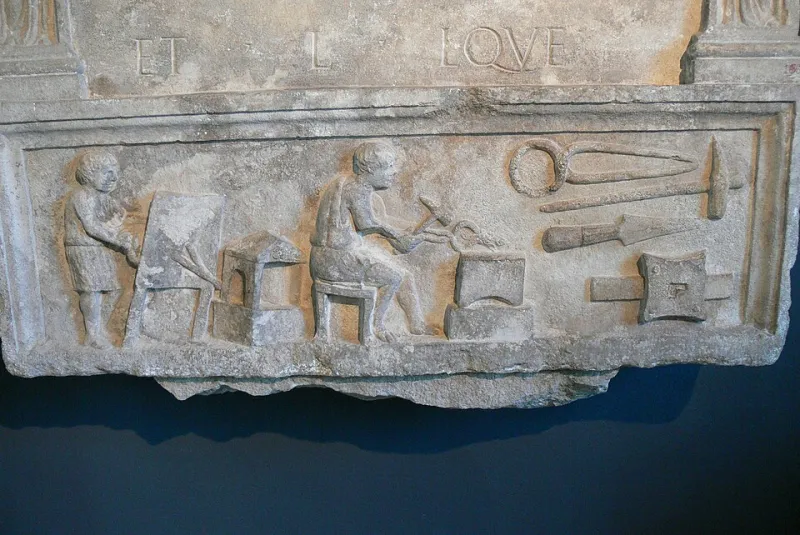
Photo: Cristina Gottardi cristina_gottardi, CC0, via Wikimedia Commons
There is a particular kind of story the world's oldest mythologies know how to tell — one that does not end with a throne reclaimed or a dragon slain. It ends, if it ends at all, with a figure still walking. Still searching. Still outside the gates of every home they have ever known. This is the myth of the wanderer, and it is among the most emotionally sophisticated narrative traditions the human imagination has ever produced. Fantasy fiction, for all its ambition, has largely left it behind.
The genre's dominant architecture remains the quest. A hero departs, endures trials, and returns transformed — or does not return at all, dying in a blaze of meaningful sacrifice. Both structures share a crucial assumption: that movement has a destination, that displacement is temporary, that the story's moral weight is resolved through arrival. But the mythological wanderer operates under a different and far more unsettling premise. For these figures, exile is not a phase. It is a condition.
The Mark That Cannot Be Removed
Consider the figure of Cain in Jewish and later Christian and Islamic tradition. His punishment is not death — it is perpetual life without rootedness. Marked and driven from the land, he is condemned to wander a world that will never fully receive him. What makes this mythological construction so striking is its refusal of resolution. Cain does not earn redemption through suffering. He simply continues. The mark on his forehead is simultaneously a curse and a protection, a sign of divine rejection and divine preservation — a paradox that later theological traditions spent centuries trying to unravel.
Islamic tradition extends this architecture through the figure of Iblis, cast from paradise not merely as a punishment but as a kind of cosmic reorientation. His wandering is not geographic but ontological: he exists at the margins of a divine order he once inhabited fully. The emotional register here is not villainous menace so much as profound, irreversible estrangement. These are not the clean moral coordinates of fantasy's alignment charts. They are something murkier and more honest about how loss actually feels.
Walking Across Eternity
Hindu mythology offers its own elaborate vocabulary for displacement. The concept of vanavasa — forest exile — appears across the Ramayana and Mahabharata not as a temporary inconvenience but as a spiritually transformative, often agonizing condition. Rama's fourteen years in the forest are not a montage of heroic preparation. They are an extended encounter with impermanence, with the dissolution of identity that comes when the structures defining who you are — palace, title, kingdom — are stripped away. The forest in these narratives is not merely a setting. It is a philosophical state.
The wandering sage tradition in Hinduism — the parivrajaka, the one who moves ceaselessly — frames displacement not as punishment but as a chosen form of liberation from attachment. This creates a genuinely complex dual mythology: exile as curse and exile as transcendence, sometimes inhabited by the same figure simultaneously. Fantasy worldbuilding has barely scratched the surface of what this duality could offer.
The Songlines Beneath the Story
Perhaps no mythological tradition treats wandering with greater philosophical sophistication than the Aboriginal Australian concept of the Songlines — the invisible pathways across the continent along which ancestral beings traveled during the Dreaming, singing the world into existence as they walked. To travel a Songline is not merely to move through space. It is to participate in an ongoing act of creation, to maintain the world's coherence through the act of passage itself.
The implications for narrative are staggering. Here is a mythology in which wandering is not exile from meaning but the very mechanism through which meaning is sustained. A character who walks a Songline is not searching for home — they are home, because home is not a place but a continuous relationship between movement and song. Fantasy fiction, so committed to the idea of the sacred hearth, the ancestral seat, the castle at the story's center, has almost no framework for imagining this kind of belonging-in-motion.
What the Quest Narrative Costs Us
The dominance of the hero's journey in fantasy is not accidental. Joseph Campbell's monomyth provided the genre with an enormously useful structural grammar, and Tolkien's shadow falls long across every secondary world created since. But the quest narrative carries embedded assumptions that quietly exclude the wanderer's myth. It presupposes that departure is chosen, that trials are meaningful in proportion to what they prepare the hero for, and that homecoming — literal or symbolic — is the proper terminus of suffering.
The wanderer myths reject all three premises. Displacement in these traditions is frequently unchosen and disproportionate. The suffering it produces does not necessarily build toward anything. And the concept of home, when it appears at all, is often revealed to be irrecoverable — not because the hero failed, but because the world does not operate on principles of narrative fairness.
This is psychologically richer territory precisely because it maps more accurately onto human experience. Displacement, statelessness, and the grief of irrecoverable belonging are not marginal experiences in the world. They are among the most common. The United States itself was built in part through forced displacement — of Indigenous peoples, of enslaved Africans, of immigrant communities severed from their origins. A fantasy tradition that drew seriously from wanderer mythology would not merely be more diverse in its source material. It would be more honest about the world its readers actually inhabit.
The Stories Waiting to Be Written
The good news is that the material is there. The wandering Jew of medieval legend — a figure whose origins are troubling but whose mythological resonance is undeniable — the djinn exiled from the celestial court, the Hindu king stripped of kingdom and caste, the Aboriginal songkeeper whose country has been severed from its Dreaming pathways: these are characters of extraordinary depth. They carry within them questions that the quest hero rarely has to confront. What do you become when the story refuses to give you an ending? How do you construct identity when every structure that once defined you has been removed? Is movement itself a form of home?
Fantasy at its finest has always used the mythological to illuminate the psychological. The genre's greatest works do not merely borrow gods and monsters — they use those borrowed forms to say something true about what it means to be alive and uncertain. The myth of the wanderer, in all its cultural variations, offers exactly that kind of truth. It is a tradition that does not promise arrival. It only promises that the walking continues, and that somewhere in the continuation, meaning might yet be found.
Arkhalia exists precisely for these unmapped territories — the places in mythology where the ground shifts underfoot and the familiar story refuses to resolve. The wanderer has been waiting at the edge of fantasy's map for a long time. It is past time to let them in.