Neither Demon nor Angel: How Slavic and Balkan Spirits Expose the Moral Poverty of Western Fantasy's Alignment System
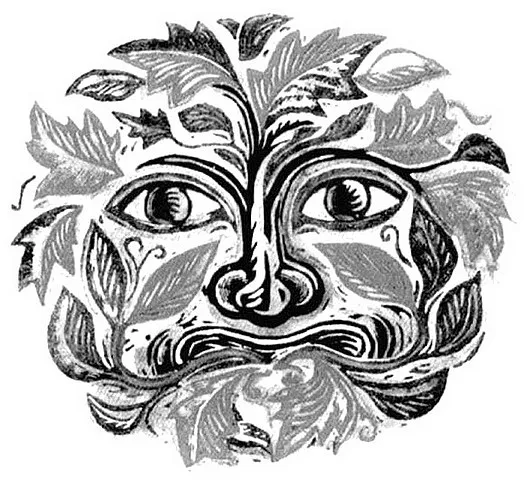
Photo: Léon Bakst, Public domain, via Wikimedia Commons
Every American who has ever sat down with a fantasy novel, rolled dice at a tabletop gaming table, or spent an evening inside a role-playing video game has encountered some version of the same fundamental question: is this creature good, or is it evil? The genre has built entire taxonomies around the answer. Alignment charts. Faction systems. Moral meters that tick upward when you spare the peasant and plummet when you loot the church. Western fantasy, shaped largely by the Anglo-Saxon literary tradition and the theological inheritance of medieval Europe, has long operated on the assumption that supernatural beings occupy fixed positions on a moral spectrum — and that the hero's job is to know which side of the line they stand on.
Slavic and Balkan mythology never received that memo.
Across the forests of Poland, the river valleys of Serbia, the mountain villages of Bulgaria, and the windswept plains of Ukraine, generations of storytellers built a supernatural world populated by beings that refuse to be categorized so conveniently. These are spirits that protect and punish, heal and harm, welcome and expel — sometimes within the span of a single encounter. They are not morally neutral in the bland, indifferent sense. They are morally conditional, operating according to their own internal logic, demanding something from the humans who share their world. Understanding them requires abandoning the binary and accepting something far more unsettling: that a guardian can also be a threat.
The Domovoi and the Cost of Being Kept
Consider the Domovoi, one of the most widely documented household spirits in Slavic tradition. This figure — sometimes described as a small, hairy, vaguely humanoid presence — was understood to inhabit the interior of a home, often clustering near the hearth or beneath the threshold. Families acknowledged its presence through small rituals: offerings of bread, salt, or porridge left in corners; respectful behavior within the home's walls; the avoidance of certain actions considered offensive to the spirit's sensibility.
In return, the Domovoi performed genuine services. It watched over sleeping family members, warned of approaching danger, tended to livestock, and maintained a subtle order within the household. Ethnographers collecting oral traditions across Russia and Ukraine in the nineteenth century documented dozens of accounts in which the Domovoi was credited with waking families before fires broke out or alerting them to illness in their animals.
But the Domovoi's protection was never unconditional. Neglect the offerings, disrupt the household's rhythms, or introduce conflict and disorder into the home, and the spirit's behavior shifted. Accounts describe it pulling hair during sleep, hiding tools, souring milk, and producing unsettling sounds in the night. In more severe cases, it was said to press down on sleepers with a suffocating weight — a phenomenon so widely reported that it generated its own vocabulary across multiple Slavic languages.
This is not evil. It is not even cruelty in any straightforward sense. It is the behavior of a being whose relationship with humans is fundamentally transactional and relational — one that expects to be met halfway. The Domovoi does not punish because it is malevolent. It punishes because the covenant has been broken.
The Vila: Beauty as Warning
If the Domovoi represents the complexity of domestic protection, the Vila — found across South Slavic and Balkan traditions under various names and regional variations — represents something even more difficult to classify. These spirits, typically depicted as luminously beautiful women associated with forests, mountains, water sources, and storm clouds, occupy a space in the mythological record that resists every attempt at simple labeling.
The Vila was understood to possess extraordinary healing knowledge. Warriors wounded in battle could be restored by a Vila's intervention. Herbs gathered near places associated with them were believed to carry unusual potency. In some traditions, a Vila could be a protector of specific individuals or communities, intervening in conflicts on behalf of those she favored.
And yet the Vila was also a figure of genuine danger. Men who stumbled upon Vila dancing in forest clearings risked madness or death. Those who insulted them, broke oaths made in their presence, or disrupted the natural spaces they inhabited could expect retribution that was swift and without mercy. The Serbian epic tradition, which is among the richest bodies of oral poetry in European literature, features the Vila as a recurring figure whose allegiances shift based on honor, faithfulness, and the behavior of the humans around her. She is neither monster nor guardian. She is both, depending entirely on what you bring to the encounter.
What Fantasy Loses by Insisting on Clarity
The dominant tradition in Western fantasy — from Tolkien's clearly delineated races of Middle-earth to the alignment systems codified in Dungeons & Dragons — tends to locate moral meaning in identity rather than relationship. Orcs are threatening because of what they are. Elves are trustworthy because of what they are. The supernatural world is organized around stable essences, and the protagonist's task is largely one of recognition: identify the nature of the thing in front of you, and respond accordingly.
Eastern European mythology proposes a different model entirely. In this framework, moral meaning emerges from the quality of the relationship between humans and the supernatural world. The Domovoi is not intrinsically benevolent or malevolent — it is responsive. The Vila is not an ally or an enemy by nature — she becomes one or the other based on what the human brings to the exchange. This is a worldview that places enormous ethical weight on human behavior, because human behavior is precisely what determines whether the spirits of the world will sustain or destroy you.
For fantasy worldbuilders, this distinction carries significant creative implications. A genre that has spent decades elaborating on the internal cultures, histories, and taxonomies of its supernatural beings might find extraordinary new territory in asking a different question: not what is this creature, but what does this creature require? What does coexistence with it demand? And what happens when those demands conflict with what the human characters want or need?
Building Worlds That Breathe Ambiguity
The most sophisticated fantasy fiction of recent years has begun moving in this direction. Works that draw on Slavic folklore — including the surge of interest in Polish mythology following the international success of The Witcher franchise — have introduced American audiences to supernatural figures that operate on logic systems quite different from the Tolkienian model. But even these adaptations frequently domesticate the ambiguity, softening the Vila into something more recognizably fae, or reducing the Domovoi to a quirky household mascot.
The full weight of what these traditions offer has not yet found its way into mainstream fantasy. The vision of a world in which protection and danger are not opposites but aspects of the same relationship — in which the spirits that guard you are the same ones that could destroy you, and in which your own conduct determines which face they show — remains largely unexplored at the scale the genre operates on.
Eastern European mythology built its supernatural architecture not on the question of good versus evil, but on the far more demanding question of how humans and the forces of the world negotiate the terms of their shared existence. That is a question worth asking again. Fantasy, at its most ambitious, has always been about the places where the known world ends and something older begins. The Domovoi waits at the threshold. The Vila dances in the clearing just beyond the tree line. The terms of the encounter are still open.