Stranger Than Hell: The Death Realms That Fantasy Fiction Is Too Afraid to Enter
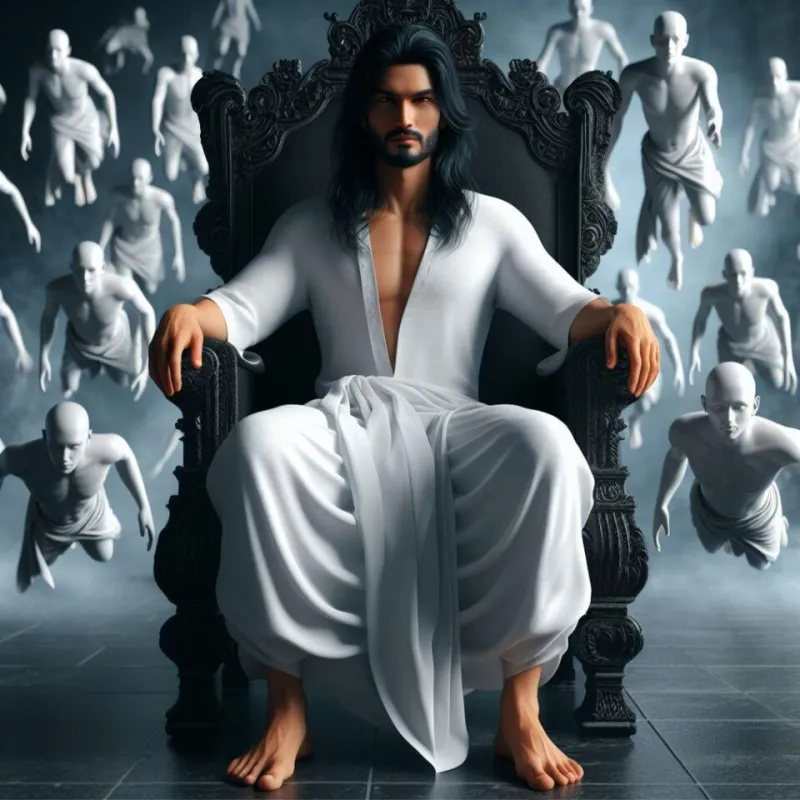
Photo: Author: DALL-E; prompted by Haoreima, Public domain, via Wikimedia Commons
There is a peculiar comfort in the familiar inferno. Flames, judgment, a stern presiding deity, and the clear moral architecture of reward versus punishment — Western fantasy has returned to this template so many times that it has calcified into assumption. When a fantasy novel or role-playing game needs an underworld, it almost invariably reaches for Dante, Milton, or some diluted echo of Christian eschatology dressed in fictional clothing. The result is a genre that has, in effect, decided there is only one way to be dead.
That decision impoverishes everything it touches.
Because scattered across the world's mythological traditions are death realms so conceptually strange, so philosophically radical, and so narratively rich that they make the standard fantasy hell look like a waiting room with better lighting. These are not simply alternate settings. They are alternate ideas — about what death means, what the self becomes after it, and what obligations the living carry toward those who have passed. Embracing them would not merely refresh the genre's scenery. It would restructure its moral foundations entirely.
The Great Below: Mesopotamia's Democracy of Dust
Long before Dante descended through his orderly circles, the Sumerians and Akkadians imagined a place called Kur — sometimes rendered as the Great Below or the Land of No Return. It was governed by Ereshkigal, a queen whose authority was absolute and whose temperament was not that of a punisher but of a sovereign enforcing the laws of a different kind of existence.
What makes Kur so conceptually startling is its radical egalitarianism. The dead did not arrive sorted by their moral record. Kings and servants, the virtuous and the wicked, all descended to the same grey, dust-choked realm, wearing cloaks of feathers and eating clay. The afterlife was not a consequence of how one had lived. It was simply the condition of having lived at all.
The myth of Inanna's descent into the underworld — one of the oldest written narratives in human history — dramatizes this philosophy with unsettling clarity. Inanna, goddess of love and war, passes through seven gates, surrendering an article of power at each threshold, until she arrives stripped of everything that defined her in the world above. Death, in the Mesopotamian imagination, is not a verdict. It is a transformation into something that the living cannot fully comprehend or categorize.
For a fantasy writer, this framework offers something that morally binary underworlds cannot: genuine ambiguity. A death realm without judgment forces characters — and readers — to confront mortality on its own terms, without the consolation of cosmic justice.
Yomi and the Horror of Impermanence: Japan's Rotting Kingdom
Japanese mythology gives us Yomi-no-Kuni, the shadowed land beneath the earth where the dead become increasingly unrecognizable versions of themselves. The creation deity Izanami retreats there after dying in childbirth, and when her husband Izanagi descends to retrieve her, he violates the one prohibition she sets: he lights a torch and looks at her.
What he sees is a body in advanced decomposition, writhing with maggots, attended by thunder deities born from her decay. He flees in horror. She pursues him in fury. The boundary between the living and dead worlds is sealed with a great boulder, and across it, the two estranged deities exchange their final words — she promising to kill a thousand of his people each day, he vowing to create fifteen hundred new lives to answer her.
This is not a story about punishment or reward. It is a story about the irreversibility of change and the violence of grief mishandled. Yomi is not a place of moral consequence; it is a place of becoming-otherwise, of identity dissolving into something that the living find monstrous precisely because they cannot stop loving it.
Fantasy fiction rarely touches this kind of underworld because it demands emotional complexity that a simple evil-lair aesthetic cannot provide. But the narrative possibilities are immense. A protagonist who descends to Yomi-like depths is not battling a dark lord — they are confronting the unbearable fact that the person they loved is no longer the person they loved.
Pulotu and the Inverted World: Polynesian Death as Paradise Displaced
Among several Polynesian traditions, the realm of the dead is not underground at all. Pulotu — known across Tonga, Samoa, and related island cultures by various names — exists as a kind of mirror world, sometimes located beneath the ocean, sometimes at the western edge of the horizon where the sun descends. Crucially, it is not imagined as a place of suffering. It is, in many accounts, more abundant and beautiful than the living world.
This inversion carries a quietly devastating philosophical implication: death is not a diminishment but a displacement. The dead inhabit a world that is, in some sense, richer than ours — which raises the question of why the living should fear it, and what it means to mourn those who have traveled there.
Some traditions describe the dead as living versions of themselves in Pulotu, feasting and continuing their social lives, while their bodies decay in the world above. The boundary between realms is permeable; certain priests and navigators were believed capable of crossing it. Death, in this framework, is less an ending than a relocation — one that carries its own forms of longing and loss, but not the annihilating finality that Western eschatology tends to impose.
For storytellers, a Pulotu-inspired death realm would generate entirely different dramatic stakes. The question would not be how to defeat death or escape hell, but how to navigate the complicated relationship between two worlds that are simultaneously separate and entangled.
Guinée and the Ancestral Court: West African Death as Continuation
In Haitian Vodou — a tradition with deep roots in West African Vodun — the dead travel to Guinée, a realm beneath the waters that mirrors the living world in its social complexity. The lwa, or spirits, who govern Guinée are not demons or angels. They are personalities: capricious, generous, demanding, humorous, and fully capable of intervening in the affairs of the living when properly honored.
Death in this tradition is not a departure from community but a transformation of one's role within it. Ancestors remain active participants in the lives of their descendants, requiring offerings, maintaining relationships, and occasionally expressing displeasure when neglected. The boundary between living and dead is, by design, thin and negotiable.
This cosmology resists the fantasy genre's tendency to treat the underworld as an antagonist's domain or a place of pure threat. In a narrative shaped by Guinée-like logic, the dead are not enemies to be defeated or victims to be rescued. They are elders — complicated, powerful, and owed a form of respect that the living must continually earn.
What the Genre Is Missing
The pattern across all of these traditions is striking. Mesopotamian death asks: what remains of self when everything is stripped away? Japanese death asks: can love survive what time does to the beloved? Polynesian death asks: if the other world is not worse than this one, what does grief actually mean? West African death asks: what are the obligations between the living and those who came before?
None of these are questions that a standard fantasy hell is equipped to raise. They require underworlds that operate on different axioms — places where the moral calculus is not good-versus-evil but self-versus-dissolution, love-versus-transformation, community-versus-forgetting.
The great untapped resource of world mythology is not a collection of exotic settings waiting to be reskinned for genre fiction. It is a collection of philosophies — ways of understanding what death means and what it demands of those who have not yet arrived there. Fantasy fiction that genuinely engages with these traditions would not simply look different. It would think differently, asking questions of its readers that the genre has, so far, rarely had the courage to pose.
The door to these realms has always been open. The more interesting question is why so few storytellers have chosen to walk through it.