The Spirits Next Door: How Mythology's Most Intimate Guardians Were Left Out of Fantasy's Grand Design
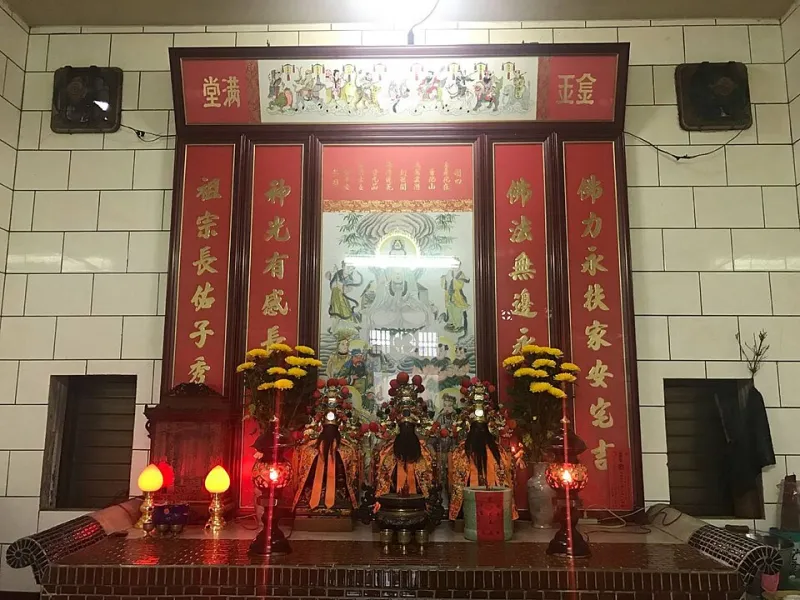
Photo: 創作者:莊文生。貢獻者:宜蘭縣政府文化局, CC BY 3.0 tw, via Wikimedia Commons
There is a particular kind of supernatural figure that appears, in one form or another, in almost every human culture that has ever recorded its beliefs. It does not sit upon a throne at the top of a cosmic mountain. It does not demand blood sacrifice or orchestrate the fates of nations. It lives, instead, in the corner of your kitchen, beneath the threshold of your front door, inside the roots of the oak tree at the edge of your property. It knows your name. It knows your grandmother's name. It is, in the most literal sense of the word, a neighbor — and modern fantasy fiction has almost entirely forgotten it exists.
The great guardian spirits of world mythology represent one of the most emotionally resonant categories of supernatural being ever conceived by the human imagination. Yet walk into any American bookstore, browse any major fantasy streaming series, or scroll through the most celebrated worldbuilding wikis online, and you will find these figures conspicuously absent. The genre has made room for pantheons, dragons, dark lords, and chosen ones. It has not made room for the domovoi.
What We Mean by Guardian Spirits
Before examining the absence, it is worth defining the presence. Guardian spirits, as understood across world mythological traditions, are supernatural entities whose power is fundamentally relational and localized. They are not omnipotent. They are not universal. Their authority is specific: this household, this river bend, this stretch of forest road, this family line.
In Japanese Shinto tradition, kami inhabit specific natural features and human-made spaces with a degree of particularity that Western monotheistic frameworks struggle to translate. A waterfall does not merely contain a spirit — the waterfall is the spirit, and that spirit has a temperament, a history, and a relationship with the people who live nearby. Neglect the proper acknowledgments and the spirit withdraws its protection. Tend to the relationship, and something genuinely reciprocal takes shape.
The Slavic domovoi operates on an even more intimate scale. This household guardian, found in traditions stretching from Russia through Poland and into the Balkans, is bound specifically to a single family's dwelling. It protects the home from misfortune, warns of danger, and in some accounts actively disciplines members of the household who behave dishonorably. Its power is not cosmic. It is domestic — and that domesticity is precisely what makes it so psychologically compelling.
West African traditions, particularly those that gave rise to Vodou and Candomblé in the Americas, offer the orisha — divine forces associated with natural phenomena, human activities, and ancestral lineages. Figures like Eshu, who governs crossroads and communication, or Yemoja, guardian of rivers and motherhood, are not remote abstractions. They are engaged, opinionated presences whose relationship with human communities involves negotiation, reciprocity, and genuine personality.
The Default Setting Problem
Modern Western fantasy, for all its imaginative ambition, operates with what might fairly be called a default setting when it comes to the supernatural. That default was largely established in the mid-twentieth century through the enormous cultural gravity of Tolkien's work, and it has proven remarkably difficult to escape. The structure runs something like this: gods are distant and largely inactive; magic is either inherited or learned through formal systems; the supernatural intervenes in human affairs primarily through grand, plot-relevant events.
What this architecture systematically excludes is the texture of lived supernatural experience that guardian spirit traditions encode. The domovoi is not relevant to the fate of the world. Neither is the Scottish brownie, the Roman Lar familiaris, the Chinese Zao Jun who watches over the kitchen hearth, or the Yoruba egungun who carries the protective presence of honored ancestors. Their relevance is to the family, to the household, to the single life being lived in a specific place at a specific time.
This is not a minor aesthetic difference. It is a profound structural gap. When fantasy fiction populates its worlds exclusively with gods who move mountains and heroes who reshape history, it loses the capacity to tell stories about the supernatural as something that touches ordinary people in ordinary moments. The guardian spirit tradition exists precisely to address that gap — and fiction has largely declined the invitation.
The Emotional Architecture of Proximity
Consider what a story gains when it takes these figures seriously. A household in a fantasy world that maintains a relationship with its domovoi is a household with a history. The spirit has watched three generations grow up in those rooms. It remembers the grandfather who kept the hearth clean and the uncle who did not. It has opinions. When the family is threatened — by creditors, by war, by a neighbor's curse — the domovoi's response is not a function of cosmic alignment. It is a function of relationship.
This is emotionally richer than almost anything the distant-god model can produce, because it is intimate. The stakes are personal rather than universal, which paradoxically makes them easier to feel. American readers who have grown up with stories about family legacies, ancestral homes, and the weight of local history are not strangers to this emotional register. It is the register of the family farm, the neighborhood church, the grave plot in the county cemetery. Guardian spirit mythology speaks directly to that experience and elevates it into the realm of the sacred.
Japanese fiction — both literary and cinematic — has understood this for decades. The work of Hayao Miyazaki is perhaps the most globally visible example of a creative tradition that treats kami and guardian spirits not as exotic background decoration but as the primary emotional subject matter. My Neighbor Totoro is, at its core, a story about what it means to live in right relationship with the protective spirits of a place. Its power derives entirely from the intimacy of that relationship, not from the scale of any cosmic conflict.
What Fantasy Stands to Recover
The argument here is not that every fantasy novel needs a household spirit in the corner. It is that the near-total absence of guardian figures from the genre's mainstream represents a failure of imaginative nerve — a willingness to draw from the most spectacular and distant elements of world mythology while ignoring the most human.
The traditions are there, waiting. The alux of Mayan belief, small guardians of fields and forests. The nisse of Scandinavian households, close cousins to the domovoi. The penates of Roman domestic religion. The zashiki-warashi of Japanese tradition, child-spirits who bring fortune to the homes they inhabit. Each of these figures carries with it an entire philosophy of how human beings relate to the supernatural — not through awe at overwhelming power, but through the careful, daily work of maintaining a relationship.
Fantasy fiction that takes this seriously would not look like the genre's current mainstream. It would be quieter in some respects, more attentive to domestic space and local geography, more interested in the ethics of reciprocity than in the mechanics of combat. It would ask different questions: not can the hero defeat the dark lord, but what does this family owe the spirit that has watched over them for two hundred years, and what happens when that debt goes unpaid?
Those are, it turns out, some of the oldest questions human beings have ever asked. Mythology preserved them because they matter. The best fantasy fiction will eventually rediscover why.