Smoke, Bargains, and Ancient Fire: How Jinn Mythology Became Fantasy's Greatest Missed Opportunity
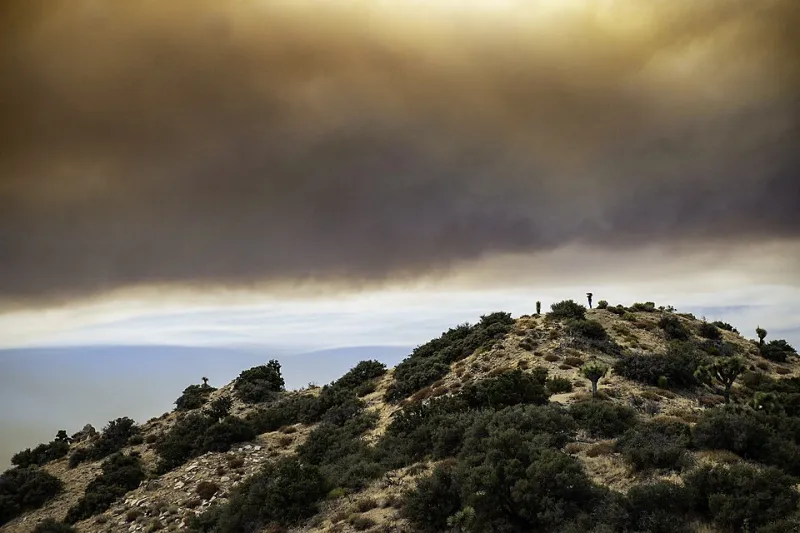
Photo: Joshua Tree National Park, Public domain, via Wikimedia Commons
There is a moment in almost every American fantasy novel when the rules of magic are revealed. Perhaps a wizard consults a grimoire. Perhaps a chosen hero discovers an innate power tied to bloodline or prophecy. The architecture of these revelations is familiar, even comfortable — rooted in the European traditions that have governed the genre since its modern inception. Yet somewhere beyond those well-traveled corridors of imagination, an entire cosmological system has been waiting: older, stranger, and arguably more structurally sophisticated than anything Tolkien or his inheritors ever devised.
That system belongs to the jinn.
A Mythology Built on Moral Architecture
To speak of jinn as merely wish-granting spirits trapped in bottles is to describe a cathedral by pointing at a single brick. The jinn of Islamic and pre-Islamic Arabian tradition are a civilization — one that exists in parallel to humanity, governed by its own courts, its own moral codes, and its own relationship to the divine. In the Quranic framework, jinn are created from smokeless fire, just as humans were fashioned from clay and angels from light. They are not demons, nor are they simple supernatural servants. They are a category of being with free will, capable of faith and transgression, salvation and damnation.
The theological implications alone are staggering. A magic system derived from jinn mythology would not be morally neutral. Every invocation, every bargain, every summoning would carry ethical weight — the practitioner forced to navigate questions of consent, obligation, and spiritual consequence. Compare this to the comparatively clean mechanics of, say, a Dungeons & Dragons spell slot system, and the contrast is immediate. Jinn magic is relational. It is political. It is, at its core, a negotiation between two sovereign wills.
The Hierarchy of the Unseen Courts
What makes jinn mythology particularly compelling for world-builders is its internal complexity. Classical Islamic scholarship and Arabian folk tradition both describe distinct categories of jinn, each with its own temperament and domain. The marid are among the most powerful — vast, aquatic, and proud, often associated with the sea and capable of tremendous sorcery. The ifrit are creatures of cunning and dark fire, frequently depicted as architects of elaborate schemes. The si'la are shapeshifters of extraordinary subtlety. The ghoul haunt liminal spaces — crossroads, graveyards, the edges between the known and the unknown.
This is not a flat pantheon. It is a layered social order, with alliances, rivalries, and codes of conduct that mirror the complexity of human courts. Entire regions of the unseen world — often described in classical texts as the jinn's own kingdoms, running beneath or alongside the human one — operate according to rules that a skilled summoner must understand and respect. The idea that a practitioner might insult a marid's lineage, or inadvertently violate the hospitality customs of an ifrit court, introduces a richness of consequence that most European-derived magic systems simply do not possess.
Why Western Fantasy Looked Away
The reasons for fantasy's long neglect of this tradition are neither simple nor entirely innocent. The genre's dominant lineage — from Victorian fairy tales through pulp adventure fiction to Tolkien's foundational synthesis — drew heavily on Norse, Celtic, and Greco-Roman sources. These were the mythologies that English-speaking writers encountered in their educations, in their cultural inheritance, in the literature that surrounded them. The Arabic and Persian traditions, despite their profound influence on medieval European thought through texts like One Thousand and One Nights, were filtered through layers of translation, exoticization, and deliberate othering.
The genie of Western pop culture — comical, subservient, bottle-bound — is perhaps the most damaging distortion. From I Dream of Jeannie to the 1992 Disney animated film, American audiences received a version of jinn mythology stripped of its sovereignty, its theology, and its moral weight. A being that was, in its original context, a free agent of cosmic significance became a domestic servant awaiting the correct verbal command. The mythology was not forgotten so much as it was systematically diminished.
The Writers Who Are Changing the Conversation
The landscape is shifting. A generation of authors — many of them drawing on their own cultural heritage — has begun returning to the jinn in their full, undiminished complexity. P. Djèlí Clark's A Master of Djinn places a jinn-haunted alternate Cairo at the center of a murder mystery, restoring both the grandeur and the danger of the tradition. Salma Deera, Roshani Chokshi, and others working at the intersection of South Asian and Middle Eastern folklore have incorporated jinn into narratives that refuse the diminished Western template.
Perhaps most significantly, the rise of what critics have termed "ownvoices" fantasy — fiction written by authors from within the traditions they depict — has brought a new standard of mythological fidelity to the genre. These writers are not raiding a foreign archive for exotic flavor. They are building from the inside, and the results are architecturally different from what Western fantasy has long produced.
What the Jinn Offer That Elves Cannot
It is worth pausing to articulate precisely what makes jinn mythology so structurally valuable as a foundation for speculative fiction. First, its ambiguity. Unlike the binary moral frameworks that govern much of Western fantasy — where elves tend toward light and orcs toward darkness — jinn occupy a genuinely contested moral space. A jinn may be devout, wicked, indifferent, or profoundly tragic. It may honor its agreements with exquisite precision while still engineering outcomes that devastate the humans it has technically served.
Second, its rules. The bargaining conventions of jinn mythology are not merely narrative devices. They encode a philosophy of language, of obligation, and of consequence. A wish poorly worded is not just a plot twist — it is a meditation on the dangerous imprecision of human desire. Third, its scale. The jinn courts, as described in classical sources, suggest a world of enormous scope: ancient grievances, political marriages between jinn dynasties, territories that exist in dimensions adjacent to the human one. This is the raw material of epic fantasy, uncut and largely untouched.
A World Waiting to Breathe
Arkhalia exists on the premise that myths are not artifacts. They are living systems — architectures of meaning that continue to generate new structures when genuine attention is paid to them. The jinn tradition is not a curiosity from a distant culture. It is one of the most sophisticated mythological frameworks humanity has ever produced, and it has been waiting at the edge of the fantasy genre's awareness for decades.
The smoke has always been there. The fire beneath it has never gone cold. What the genre has lacked, until recently, is the willingness to look directly into the flame — and to accept that what looks back may be far older, and far more interesting, than anything a European wizard ever conjured.