Before the First Word: What Primordial Emptiness Reveals About the Hidden Architecture of Every Fantasy World
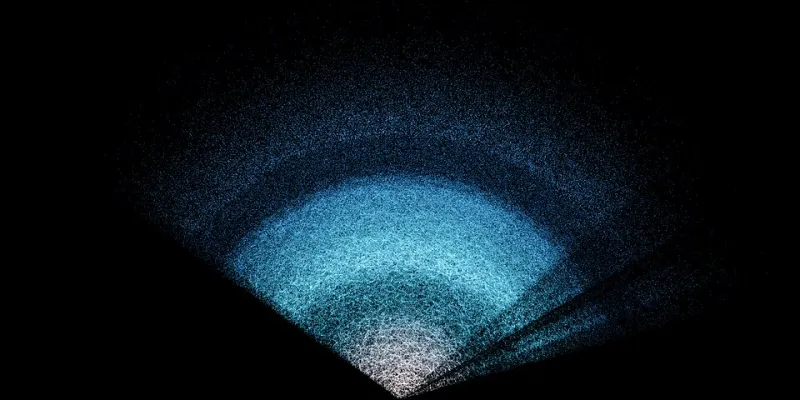
Photo: DESI Collaboration/DOE/KPNO/NOIRLab/NSF/AURA/R. Proctor, CC BY 4.0, via Wikimedia Commons
There is a question that nearly every mythology on earth has attempted to answer, and that modern fantasy fiction has largely refused to ask: what existed before existence itself?
The answer, across an astonishing range of cultures and centuries, is remarkably consistent. Not chaos in the dramatic, swirling sense that fantasy art departments love to render. Not darkness as a villain waiting to be defeated. Something far more unsettling, far more philosophically demanding, and far more creatively rich — a void that was not empty at all, but pregnant with everything that would ever be.
Fantasy worldbuilding, for all its ambition, has inherited a peculiarly shallow relationship with nothingness. Worlds tend to arrive pre-furnished: ancient gods already warring, elemental forces already in conflict, magic already humming through stone and root. The moment before that moment — the silence before the first syllable of creation — is almost never examined. And in ignoring it, fantasy has quietly abandoned one of mythology's most profound and generative ideas.
The Waters That Were Never Empty
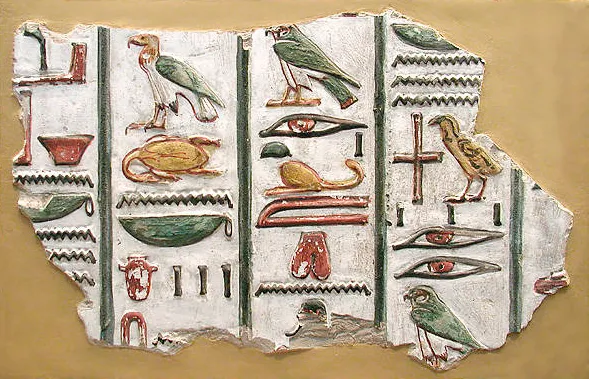
In ancient Egyptian cosmology, before Ra spoke light into being, before Atum shaped himself from his own will, there was Nun — the primordial waters. But Nun was not nothingness in the way a Western audience might instinctively picture it. Nun was potential rendered as substance. The waters did not lack anything; they contained everything in a state of absolute suspension, undifferentiated and waiting.
This distinction matters enormously. Egyptian priests did not conceive of creation as something imposed upon an absence. They understood it as something that emerged from a fullness so complete it had not yet organized itself into form. Nun persisted even after creation — lurking at the edges of the ordered world, neither hostile nor benign, simply prior.
The Norse tradition offers a parallel that is equally misunderstood. Ginnungagap, the yawning void of pre-creation, is often translated or depicted as a dramatic chasm — a cinematic abyss between fire and ice. But the Old Norse root suggests something closer to a gap that is charged, a space that leans forward into becoming. The meeting of Niflheim's frost and Muspelheim's fire within that gap was not a collision of opposites; it was a catalytic encounter made possible precisely because the void between them was receptive rather than inert.
Fantasy has borrowed the imagery of Ginnungagap — the frozen north, the fire realms, the primordial giants — while discarding the philosophical engine that made those images meaningful.
Emptiness as Womb: The Hindu and Buddhist Conceptions
Perhaps no tradition has thought more rigorously about the nature of pre-creation emptiness than the Hindu and Buddhist philosophical lineages of South Asia. The Sanskrit concept of Śūnyatā — often translated as emptiness or voidness — is not a description of absence but of interdependence. Nothing possesses inherent, self-sufficient existence. Everything arises in relation to conditions, and the void is the ground of that relational arising.
The Rigveda's Nasadiya Sukta, the famous Hymn of Creation, is one of the oldest surviving texts to wrestle honestly with this problem. It does not answer the question of what existed before creation — it holds the question open with remarkable intellectual humility. There was neither being nor non-being, it declares. Who really knows? Who will here proclaim it?
This is not poetic evasion. It is a sophisticated acknowledgment that the void precedes the categories by which we would describe it. Fantasy magic systems, by contrast, almost always operate within established ontological categories — light versus dark, order versus chaos, elemental forces in tension. The Hindu tradition suggests something more radical: that the most fundamental layer of reality is the one that cannot be categorized at all.
The Dreaming That Never Ended
Indigenous Australian cosmology introduces a concept that may be the most challenging of all for Western audiences trained on linear creation narratives. The Dreaming — sometimes called the Dreamtime, though that translation carries its own distortions — is not a period that ended when the world began. It is an ongoing condition, a foundational dimension of reality that underlies and interpenetrates the physical world at every moment.
The ancestral beings who shaped the landscape during the Dreaming did not create from nothing, nor did they create and then depart. The creative act and the created world remain continuous. The void, in this framework, is not something that was overcome by creation — it is the living substrate through which creation perpetually moves.
For a fantasy writer, this represents an almost entirely unexplored model: a world in which the pre-creative state is not historical but present, in which the silence before the first word has never fully ended and can be accessed, disturbed, or deepened. No major fantasy franchise has come close to operationalizing this idea.
What Fantasy Builds Instead
The dominant mode of fantasy cosmology is what might be called the engineering model: gods build worlds the way contractors build houses, assembling components according to a plan, and the finished structure then operates independently of its builders. This is enormously narratively convenient. It produces clear stakes, comprehensible conflicts, and villains who threaten to unmake what was made.
But the engineering model quietly smuggles in an assumption that mythology almost universally rejects — that nothingness is the enemy of being, that the void is what creation triumphs over rather than what creation emerges from and remains in dialogue with.
Consider what changes when a fantasy world is built on a different premise. If the void is generative rather than destructive, then magic might be understood not as a force imposed upon the world but as a practice of returning to the pre-formal state — of touching the condition that precedes differentiation. A mage in such a world would not be manipulating existing forces; she would be briefly dissolving the boundary between the formed and the unformed, drawing possibility out of a silence that never fully closed.
If the Dreaming model is applied, then the ancient past of a fantasy world is not merely backstory — it is a living pressure exerted on the present, accessible to those who know how to listen for it. The ruins do not simply record what was; they are what was, still breathing beneath the surface of what is.
The Generative Silence
Mythology's most consistent teaching about the void is also its most counterintuitive: emptiness is not the absence of meaning but its precondition. The silence before the first word is not nothing — it is the condition that makes the first word possible, and that gives the word its weight.
Fantasy fiction has spent decades elaborating on what worlds contain. It has built intricate taxonomies of creatures, exhaustive histories of wars, baroque architectures of magic. What it has rarely done is sit with the question that every great mythological tradition begins with — the question of what was there before there was anything to contain.
The answer waiting in those traditions is not darkness, not chaos, not the absence of god. It is something stranger and more generative: a silence so complete it could only resolve into a world.
For writers willing to begin there, the worlds that emerge might finally feel as though they were born rather than built.